Architectural Details with Luminis Media Property Photography
Property photos that stop people scrolling are rarely wide, anonymous room shots. They are the frames where the cabinetry seam catches warm window light, where a handrail curves with intent, where a shadow reveals the joinery you only notice when you live there. At Luminis Media, we build listing narratives from those moments. Architectural details are not filler, they are the language that describes craft, budget, and care. In real estate, those cues translate directly into time on market, perceived value, and the rhythm of inquiries that follow a launch.
Why details decide attention
A buyer processes a room photo in seconds, then scans for confirmation that the property is worth their weekend. Details give that confirmation. A clean mitre on a waterfall island tells a different story than a cap strip and caulk. Integrated lighting in a niche raises expectations for the rest of the build. You cannot fake a consistent reveal on a door jamb or the way a custom vent aligns with grout lines. Those things do not shout, but they build trust, and trust makes people book viewings.
We see this in metrics that matter to agents: better click-through on listing galleries, longer dwell time on the page, and higher saves when the gallery carries a rhythm of wide anchors and tactile close-ups. Real estate photography with Luminis Media uses that rhythm intentionally. The hero images invite, the architectural details persuade.
Reading a building before lifting the camera
Every property has a logic, often visible before we unpack a lens. We walk the site quietly, looking for repeated decisions. Are the corners soft or crisp. Do materials change at edges or wrap around them. Is there a consistent datum for lighting, outlets, and trim. A home with a clear design language tells us where to point.
One lake house we shot had a blackened steel spine traveling floor to ceiling through the stair void. That single structural choice echoed in the fireplace surround, the cabinet pulls, even the air vent grilles. Our sequence leaned into that motif. Instead of generic staircase images, we built a set of vignettes where the steel met white oak, where the fasteners were deliberately exposed, and where light turned the steel from matte to satin by late afternoon. The gallery felt cohesive because the house was cohesive, and the details allowed us to show it.
Light, time, and the patience to wait
Good light is the difference between a flat product shot and a photograph that makes your hand itch to touch the surface. For architectural details, that often means waiting. Morning side light reveals grain patterns in oak that Luminis Media real estate photography front light would wipe out. Backlight through gauzy sheers can turn a common lever handle into a sculptural element. With Luminis Media real estate photography, we schedule windows in the day for details rather than trying to grab them as an afterthought.
We carry flags, scrims, and small LED panels to shape light without overpowering it. The goal is gentle, believable contrast. Shiny finishes call for larger, softer sources to avoid hard specular hits. Matte limewash wants a little raking light to pull texture forward. In bathrooms, a single bounce card tucked out of frame can lift the shadow under a sconce just enough to show the knurling on a switchplate without killing ambiance. These are small moves, but they separate a serviceable frame from a persuasive one.
On exteriors, bladed light late in the day can trace reveals in cladding and deepen the negative space under soffits. We will often shoot the same corner at two times to decide which story reads better. Real estate photographer Luminis Media crews know that a good detail sometimes takes three minutes of setup and fifteen minutes of watching the sun cooperate.
Lens choice and perspective control
Details live or die by perspective. A 24 mm lens is a workhorse for rooms, but it stretches small elements into caricature. For architecture, we use longer focal lengths for details, usually 45 to 90 mm on full frame. A tilt shift at 50 mm is ideal when we need to keep lines honest while isolating a feature. If the cabinet reveals are 3 mm, a 35 mm taken too close will make them look clumsy. Back up, go longer, keep planes parallel, and the craftsmanship reads accurately.
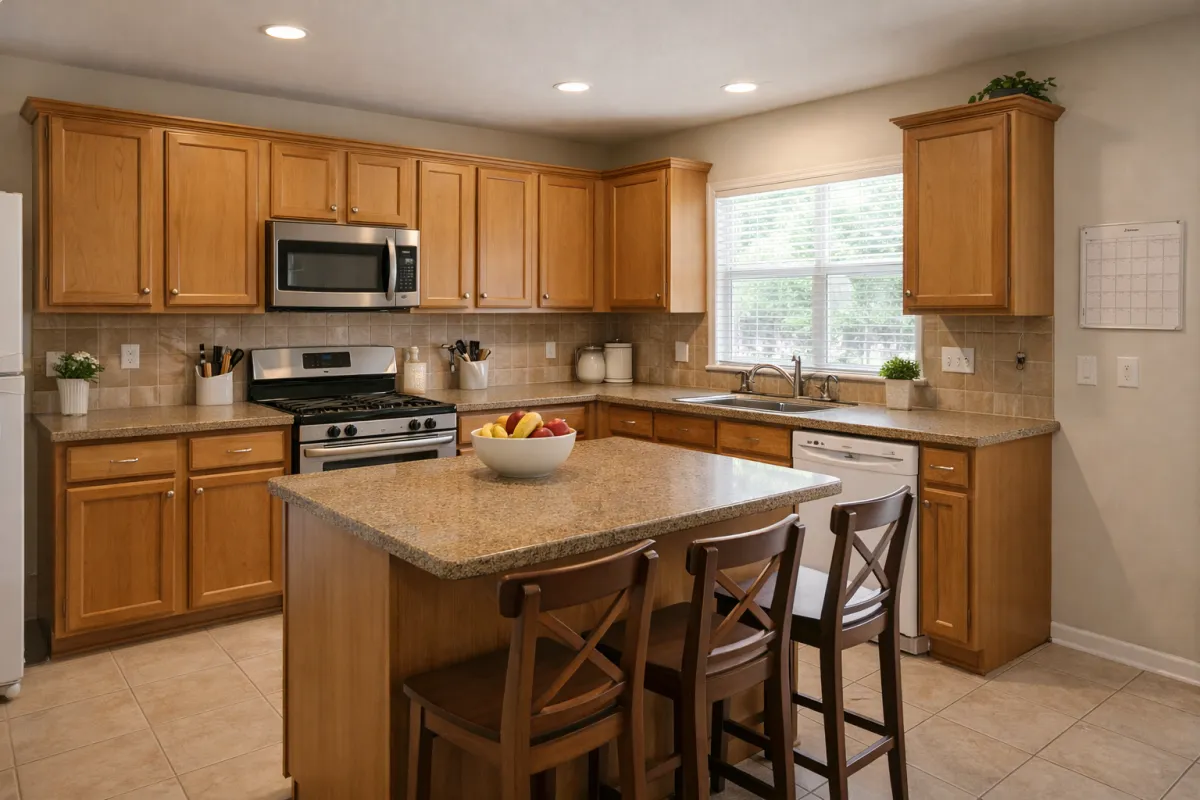
Focus stacking enters the conversation for deep elements like a mantel that steps forward to a hearth with layered objects. We use it sparingly, and only if the scene stays perfectly still. The priority is authenticity. A shallow depth frame that draws your eye to the edge profile of a countertop can be more convincing than a clinically sharp image that looks synthetic. Luminis Media property photography leans on restraint. Technical tools serve the story, not the other way around.
Styling that respects architecture
Props are seasoning, not the meal. A single linen towel with a faint stripe can give scale to a custom brass hook. A stem clipped from a yard bush, not a florist, can echo the green in a veined stone without looking staged. We work with stagers and owners to thin the room when needed. Details get lost in clutter, and they also get lost in over-styling. If a bathroom has artisan tile, we do not float a tray of apothecary bottles in front of it. If a ceiling has hand-brushed lime paint, we do not distract with an oversize plant that touches the coving.
We talk about fingerprints and dust. This sounds minor until you see a macro of a pristine chrome mixer dotted with smears. A microfiber cloth and five calm minutes can save an expensive reshoot. Agents who work with listing photography Luminis Media often tell us that our prep notes become part of their standard pre-shoot checklist, because efficiency matters when the calendar is tight.
Surface, edge, junction
When you hear photographers talk about details, it can drift into abstraction. We prefer three concrete categories that drive our shot list.
Surface is the material itself. We show grain, patina, sheen. A slab of travertine reads differently wet than dry, so we choose. Honed marble loves side light. Polished walnut needs broad, soft reflection to avoid hotspots. These frames are about texture and finish.
Edge is where the craft shows. A bullnose, a microbevel, a knife edge, a chamfer at a window return. You only need one or two honest edge frames to convey the budget tier of a kitchen. They are also where errors creep in. We check alignment and decide whether to frame tight or give context so the line makes sense.
Junction is where materials meet. Tile to baseboard, stone to metal, plaster to timber. This is where designers make value statements and builders show pride. We shoot the junctions that repeat throughout a home so the viewer internalizes them. That repetition anchors the listing gallery with a visual vocabulary.
Exteriors that speak the build
Cladding and openings define the envelope, and buyers care about both. We often spend a quarter of our time on exterior details. A close of the rainscreen gap shows a ventilated facade without a word. A soffit vent integrated in the same reveal as the cladding proves design intent. If the home uses thermally modified ash, we will show how the grain flames in low light. If the palette is thin, we look for shadow patterns cast by battens or balcony rails.
At dusk, architectural lighting deserves a deliberate approach. We turn on only the circuits that matter, avoiding the Christmas tree effect. For Luminis Media listing photography, we calibrate color temperatures so a 2700 K sconce does not fight a 4000 K kitchen strip within the same exterior frame. White balance matters because mixed light can make even high quality materials look cheap. We sometimes shoot a second darker base exposure to pull the sky deeper and let the details glow without overdriving the building.
Inside, the human scale of craft
Interiors get their personality from hand touches. We give airtime to door hardware, hinge choice, switch plates, and the way light falls on risers. The underside of a stair tread with a simple shadow line can be more memorable than a wide of the whole staircase. We often photograph cabinet interiors if they reveal dovetails or integrated power, but only when the space is spotless. A drawer with crumbs is not an architectural detail, it is a note to reschedule.
Bathrooms reward discipline. Tile lippage shows up under side light, so we choose our angle based on fairness. Real estate photography luminis.media is not about hiding flaws, but it is about removing distraction. If we see a tile run that will read poorly in an extreme close, we step back and show the room’s composition instead. For powder rooms, we love a tight frame of a basin curve meeting a wall mount tap, with the mirror edge catching a line of light that ties the scene together.
Sequencing that sells the house, not just the craft
A great detail does not sell by itself. It needs a place in a sequence that takes a buyer from whole to part and back to whole. We build galleries where a wide room frame provides orientation, followed by two to three details that deepen understanding, then a return to a new wide that feels richer because of what the viewer now notices. Agents using Luminis Media real estate photos tell us that this back-and-forth keeps buyers engaged longer, and it lets them talk about quality without sounding like a brochure.
For a modern townhouse, we opened with the living level, then showed the corner where steel post met oak top cap with a shadow gap, a vent grille aligned with plank joints, and the back of a custom light switch plate that echoed the cabinet hardware. Only then did we step upstairs. The house felt consistent because the images carried those motifs forward.
Luxury is in the microdecisions
Luxury real estate photography Luminis Media is not only about scale. It is about restraint and precision. On high end projects, we spend extra time on the quiet things. Knife edge counter profiles. Flush baseboards. Integrated drapery pockets. Invisible speakers revealed only by a gentle fabric softness under light. These images signal money without showing a single price tag. We also favor natural light where possible, because expensive materials look worst under cheap light. If artificial is necessary, we match the room’s temperature and avoid color contamination that could flatten a natural stone’s variation.
With luminis.media real estate videography, we extend the story of details with motion. A slow pan across ribbed plaster as sunlight moves can reveal depth that a still cannot. A macro glide over fluted oak with ambient sound from the room creates a moment that buyers remember. Videography needs the same restraint as stills. Short sequences, calm pacing, and careful exposure to avoid banding on LED sources. Real estate videography luminis.media crews carry flicker free lights and test dimmer ranges before rolling.
Managing color so materials speak the truth
Wood tones shift wildly with white balance. So do stones and metals. We shoot a grey card for each key room, but we do not lock it blindly. A warmth that felt right in person should read right in the final. That means balancing accuracy with the perception that sells. Brushed brass should not swing orange, and cool daylight should not bleach walnut. Luminis Media real estate photos benefit from calibrated monitors and a pipeline that keeps color profiles consistent from capture to delivery. We maintain a reference library of known materials, so if a builder used a Carrara with a familiar cast, we can cross-check to avoid heavy-handed corrections.
A workflow that protects consistency
Details amplify credibility when they are crisp, clean, and consistent across a gallery. That comes from process. We tag potential detail scenes during the walk-through, then shoot them in batches in the right light. Bracketing is used lightly on details, usually a two or three frame range to protect highlights in bright metal while keeping midtones dense. We avoid aggressive HDR on close-ups because it flattens texture. Sharpening is applied modestly, with masking to prevent halos on edges. For MLS, we deliver sRGB at practical sizes, and for architects or builders we can include higher resolution TIFFs with Adobe RGB when requested.
Collaboration with designers, builders, and stagers
The best detail frames often come from a nudge by someone who lived with the build for months. We ask designers what kept them up at night. They usually point to a transition they fought to keep clean or a custom profile that went three rounds in fabrication. Those are gold. Builders will show you the problem they solved that no one else notices. You point a camera there and your gallery reads like a behind-the-scenes tour, not just a sales package. Property photography luminis.media thrives on that humility, giving credit to the hands that made the place work.
Three shoots, three lessons
A brick rowhouse renovation came with heritage rules and a client who cared about patina. The hero shot was obvious, but the sale rode on smaller truths: lime mortar repointing that matched century-old joints, new window casings with rope profiles that echoed the originals, and a gas lamp on the stoop that bled warm into blue dusk. The detail frames made the restoration feel inevitable, not forced. The listing moved in a week.
A concrete coastal home had none of the warmth agents assume buyers want. We leaned into it. Side light revealed bug holes in the board-formed walls, a chamfer on stair treads softened the hardness, and a recessed gutter outlet disappeared into a shadow line that photographers often miss. The gallery read as honest and strong. Showings skewed to buyers looking for exactly that.
A developer spec townhouse had cost discipline, not lavish extras, so we looked for the best expressions of smart spend. Full height tile with clean caps in bathrooms, continuous plinth lines in the kitchen, and an LED strip set at the back of shelves to avoid glare. Those frames made the whole project feel considered. The compromise, a stock door with a slightly busy panel, never got a close-up. You sell the intent, not the invoice.
Common pitfalls and the fixes we carry
Reflections betray sloppy setups. Chrome taps pull in the photographer, the tripod, and half the room. We fix it with larger light sources and small shifts in angle. Dust blooms under side light. We bring a kit of brushes, microfiber cloths, and painter’s tape for quick fixes. Mixed color temperatures can ruin a tone-on-tone palette. We decide which circuit wins and turn the others off rather than fight a rainbow in post. Wide angle distortion makes joinery look off. We step back and use longer lenses, accepting a bit more ISO noise to protect geometry.
When the weather does not cooperate, exterior details can still work. Even light under cloud is perfect for showing texture without glare. We skip dusk on those days and return when the sky can carry warmth. Luminis Media real estate photographer teams plan buffers for weather windows, especially when architectural lighting is part of the deliverables.
How we integrate details into listing strategy
Agents need galleries that do three jobs. They must rank in search, convert curiosity into viewings, and arm the agent with talking points that feel specific. Luminis Media real estate photography packages sequence images with https://facebook.com/luminismedia/ MLS constraints in mind. The first five frames do the heavy lifting, but the middle of the set is where details build momentum. We choose vignettes that support known objections. If noise is a concern, we show triple seals on casements. If storage is tight, we show clever pantry pullouts. If the target buyer values sustainability, we show air sealing and material choices without turning the gallery into a spec sheet.
For web, we deliver a hero carousel with a mix of wides and two or three tactile frames to create cadence. For print, we choose one full bleed detail that opens a brochure spread with authority. Real estate photos luminis.media are tailored to each channel so the work the details do is not wasted.
Videography that breathes with the space
Real estate videography Luminis Media treats details as beats, not cutaways. A slow tilt that discovers an integrated return vent within a shadow gap does more than a fast montage of finishes. We record sync sound where appropriate, because the soft click of a pocket door or the hush of a soft-close hinge adds reality. We avoid slider moves that dramatize what should feel calm. The grade is gentle, with enough contrast to separate planes but not so much that whites clip and metals go harsh. Audio and color must match the stills so the brand across luminis.media real estate videography and photography holds together.
A practical, shoot-day checklist for details
- Walk the property and tag repeated junctions worth showing
- Confirm light sources and color temperatures for each key space
- Clean touchpoints that will be shot tight, especially metals and glass
- Preselect three to five priority details per room to avoid overshooting
- Capture a grey card or color checker in each lighting condition
Post production principles that protect authenticity
- Keep local contrast soft on skin-adjacent finishes like plaster and fabric
- Mask sharpening to edges, avoid texture halos on matte paint
- Normalize white balance across the set, then allow gentle room-to-room variation
- Remove distractions sparingly, leave honest imperfections that tell truth
- Deliver a primary MLS set and a secondary editorial set when appropriate
What clients can expect from Luminis Media
When clients book luminis.media property photography, we ask for a short design brief or spec list. It does not need to be fancy. We scan for the handful of places where the budget shows and build the detail list around them. Shoots typically include a walkthrough, primary hero images, a measured set of detail vignettes, and, when requested, a short motion piece. Turnaround times vary with scope, but we keep communication tight. If we find a detail that needs a second visit for better light, we say so and schedule it. The goal is a gallery that moves a listing faster and leaves designers and builders proud to share.
There is a difference between images that decorate a listing and images that defend its price. Architectural details are the defense. They speak to care, they withstand scrutiny, and they make the buyer feel like someone thought through every morning they might spend in that space. Real estate photography Luminis Media is built around that belief. When the craft is the story, you do not need to shout. You need to notice, to wait for the right light, and to tell the truth cleanly. That is how homes earn the attention they deserve.