Creating Story-Driven Edits: Real Estate Videography luminis.media
Most property videos fail for a simple reason. They show everything, but they say nothing. When an edit is only a sequence of pretty rooms, it ignores the way buyers actually make decisions. People respond to flow, to a feeling of how they would live there. Story-driven editing turns footage into that feeling. It shapes a buyer’s journey through the home, reveals the personality of the space, and highlights the details agents care about without shouting. At Luminis Media, we learned this the hard way, after years of watching clients post glossy reels that stalled at a few hundred views, then post a quieter, story-led cut that filled the next open house. The edit made the difference.
This guide is not about generic tips. It breaks down a working approach to story-led real estate videography and how we build edits that serve an actual sales objective. It reflects what we do on shoots every week for luminis.media real estate videography and for clients who book us for Luminis Media real estate photos, property photography, and hybrid packages.
What story-driven looks like in property films
Story in real estate is not a character arc. It is context. What is the first impression from the curb. How does morning light move through the kitchen. Where does the eye rest when you enter the primary suite. Which detail, a marble ledge or an artisan hinge, says something true about the build quality. A story-driven edit organizes these answers in a sequence that makes emotional and spatial sense.
In a townhouse with a tricky layout, we start with the stairwell, not the living room, because it unlocks everything that follows. In a penthouse with skyline views, we open with a slow reveal of the horizon, then pull the viewer back into the textures of stone and oak that make the view feel earned, not gratuitous. The footage itself might be identical, but the order and rhythm turn it into a narrative.
Many of our view real estate photos luminis.media clients who ask for Luminis Media real estate photography book videography once they see this difference. A strong set of real estate photos from Luminis Media brings people to the listing. A carefully paced film helps them stay, imagine, and inquire.
Start before the shoot: the narrative brief
Editing begins in pre-production. A narrative brief is our way to set editorial intent before we touch the timeline. We ask the agent or builder five questions:
Who is the buyer. Be specific. A remote-working couple with a dog and an infant is a different viewer from an investor seeking short-term rental potential. If the target is trade-up family buyers, we lean into backyard continuity, mudroom practicality, and upstairs privacy.
What are the three non-negotiable value drivers. Not ten features. Three. In a custom build, maybe it is the craftsmanship of millwork, a chef-grade kitchen, and a seamless indoor-outdoor transition. The edit then reserves the longest beats for these elements.
Where is the sequence bottleneck. Every house has one. Long corridors, awkward steps between floors, or a garage that interrupts flow. We design a transition strategy upfront so the edit never stalls there.
When will the listing launch and on which platforms. Instagram Reels, YouTube, an MLS-compliant clip, and a hero cut for the agent’s site all have different formatting and pacing needs. We plan deliverables to avoid a painful re-edit scramble at the end.
Why should someone view to the end. The closer has to pay off. A staged sunset patio scene, a surprise rooftop deck, or the hidden walk-in pantry can anchor the final beat so the cut ends on a micro-climax rather than a fade.
We often do this in ten minutes on a walk-through with the agent. If you handle both stills and video, keep the brief pinned on your phone. It keeps the team honest and aligns listing photography Luminis Media with the film’s editorial arc.
The spine: a three-beat structure that works
We rarely use strict three-act templates, but a simple spine keeps the edit from wandering.
Arrival. Establish exterior, approach, entry threshold. These shots announce the aesthetic language: glass and steel minimalism, mid-century warmth, or cottage charm. The first music cue lives here. If we have voiceover, this is where we hear the agent in a single clean line, not a monologue. When we deliver luminis.media real estate photography alongside video, the hero image usually comes from this block, and we match its mood.
Exploration. Move from public to private, large to small, macro to micro. Living area to kitchen to primary suite, then into fixtures and details. Insert people if appropriate, but keep them as scale and life, not the subject. The pulse should rise and fall intentionally. In luxury real estate photography luminis.media assignments, we let air into this section. Luxury buyers need moments to linger on materials, not just rapid movement.
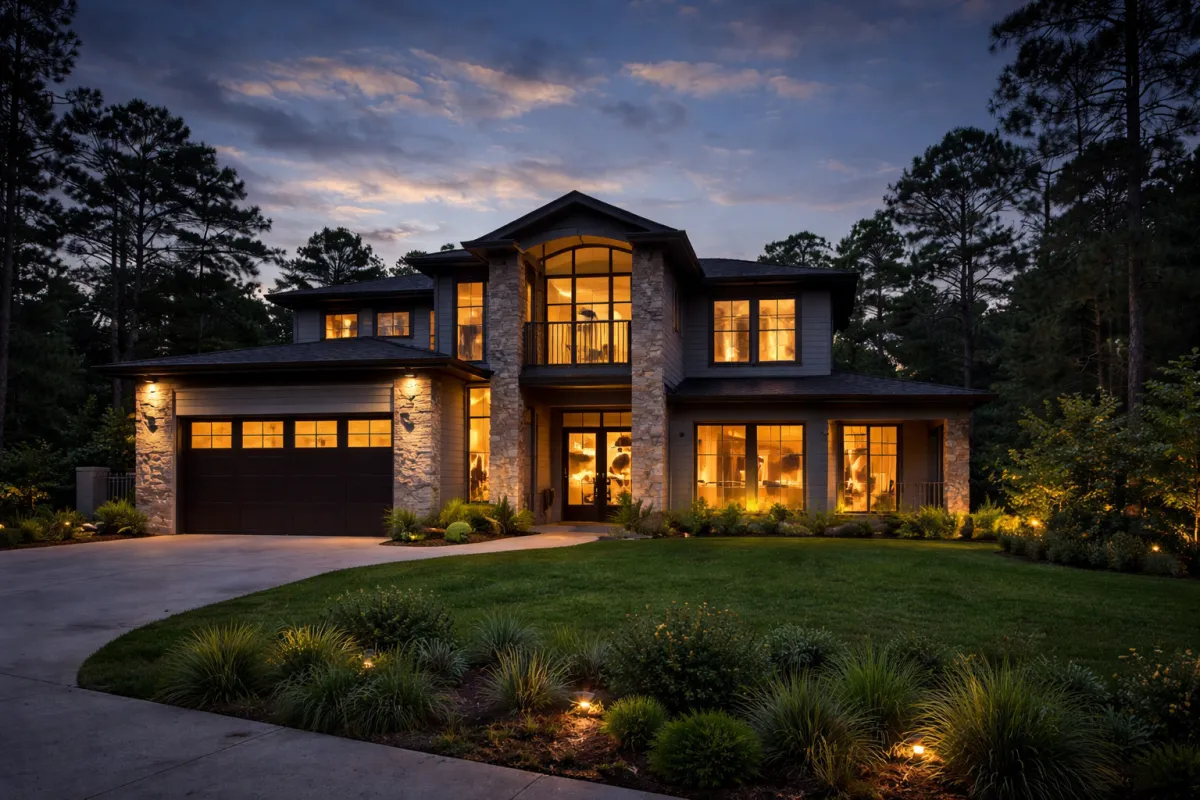
Resolution. Return to where the day would end. A terrace with city lights, the fireplace at blue hour, the soaking tub with candles. If the first shot was a promise, the last shot should feel like delivery. On a more modest listing, resolution might be a simple turning off of lights and a final pull back to the street, a quiet closing of the narrative circle.
This structure does not constrain creativity. It keeps viewers oriented so you can make bolder choices without losing them.
Music that shapes pace and buyer perception
Music licensing is a cost, but in our experience it repays itself quickly in watch time. The wrong track accelerates bounce. We avoid generic corporate pop for high-end builds. For a farmhouse renovation, a track with light acoustic texture and clear dynamic range provides soft peaks to cut on and rests to let the room breathe. For a downtown condo, minimal electronic with tasteful percussive elements can communicate precision without aggression.
We almost never cut on the exact beat. We cut just before or after, which feels human. The music should support, not dictate. If the property needs gravitas, we choose tracks with a contained low end rather than booming bass. For an airy coastal home, we look for tracks with wide stereo imaging and gentle high-frequency detail that will not turn brittle on phone speakers.
When an agent wants narration, we carve frequency from the music between 1.5 and 3 kHz so the voice sits clean. It is a small EQ move, but it stops the wash that turns VO into mud. Agents who prefer no narration still benefit from intentional sound design: a door latch, a faint garden breeze, a coffee pour in the kitchen. These are not gimmicks, they are time and place.
Pacing that mirrors architecture
Pacing belongs to the house. A 7,500-square-foot contemporary with gallery walls can take a slower baseline with longer takes. A tight urban rowhouse needs faster cuts with careful anchor shots so viewers do not feel lost. Luxury buyers want to inspect, not be rushed. Starter-home audiences have less patience for indulgent lingering. Our cuts for Luminis Media luxury real estate photography clients often sit in the 90 to 150 second range, with deliberate negative space. Entry-level properties do better around 45 to 75 seconds, with snappier scene changes and punchier music arcs.
We run a simple test. If we can mute the track and the edit still feels natural, the visual pacing is probably right. Music should add lift, not compensate for chaotic sequencing.
Anchor shots and transitions that feel motivated
Every room needs an anchor, a shot that tells the viewer, here is where we are, here is the geometry, here is the way in and out. For an open-plan living area, a slow parallax move that holds the kitchen and dining in a single frame is an anchor. For a primary suite, a locked-off wide that places windows, bed, and access to the bath anchors the space. From those anchors we move to detail coverage.
Transitions should be motivated by architecture. Cut on turns when the viewer would turn. Match move in the same axis when moving through aligned doorways. Wipe on light passing a column when traveling down a corridor. It is fine to use speed ramps and whip pans, but in moderation. If your transition draws attention to itself, ask whether it is serving clarity or just being clever.
We rely more on in-camera motion and editorial timing than heavy plug-ins. Less post often reads as higher quality, which is part of why Luminis Media real estate photography clients hire a real estate photographer Luminis Media team rather than a hobbyist with a gimbal.
Color and light as narrative
Color grading in real estate is a balancing act. True-to-life keeps trust, but the camera rarely sees what the eye saw. We set a base grade that corrects white balance room by room. Kitchens with mixed daylight and warm pendants get a split approach: keep cabinets honest, let practicals glow slightly warmer for hospitality. Bathrooms get clean whites without cyan drift. Wood tones deserve consistency. If the walnut island skews different shot to shot, viewers feel it, even if they cannot name it.
Luxury properties benefit from micro-contrast and controlled saturation. Lift shadows slightly to reveal texture in stone and fabric. Avoid teal-orange gels in the midtones, they look fashionable, not expensive. If the house has a specific brand palette, incorporate it subtly. A coastal property with blue-gray exterior might get a gentle cool in highlights outdoors while keeping interiors neutral so skin tones and floors remain natural.
When we deliver Luminis Media property photography with video, we build LUTs from the stills grade so the two sets of deliverables live in the same world. It is not only aesthetics, it is brand cohesion for the agent.
On-screen text, agent voice, and the right amount of information
Text is easy to overdo. We limit on-screen text to what helps the viewer navigate: neighborhood name, square footage, bed/bath count, standout features like a heated driveway or 14-foot ceilings. We place text only on frames with visual breathing room. If the property deserves a map or aerial callouts, keep them short and pin them to the shot. MLS variants often have to mute branding or text. Plan ahead to export a clean version.
Agent voiceover can work when the agent’s tone matches the property. A measured, confident delivery is better than a rapid-fire features list. We script in bullets, not sentences, so the delivery feels human. For some clients of luminis.media real estate photographer services, we capture a single-line intro and a single-line outro on set. The rest remains visual. The silence between words matters more than most agents expect.
Captions on social variants are non-negotiable. People watch muted. Write captions like you speak, but shorter. Capitalize sparingly. No clutter.
Shooting for the edit: coverage that pays off
Editors live or die by coverage. A clean master of each space is non-negotiable. Then two to three medium shots defining function: the island with seating, the breakfast nook, the reading corner under the window. Then details: the waterfall edge, the soft-close drawer, the texture of the tile. Movement should be repeatable in each category so you can cut between them smoothly. If the camera height or motion profile varies wildly, you hobble the edit.
We often pre-visualize hero moves in the narrative brief. If the listing’s soul is the indoor-outdoor flow, we shoot a single-axis dolly through the slider in daylight and again at sunset with practicals on, so we can make a day-night match cut. If the home has artisanal lighting, we expose for bulbs and lift shadows in grade rather than blowing highlights to keep skin-toned whites. These choices give the editor flexibility without resorting to cheesy transitions.
For clients using real estate photography Luminis Media packages, we coordinate still and motion angles so the gallery leads naturally into the film. The first still someone clicks should be a cousin of the first shot in the video. Familiarity keeps viewers engaged.
Different versions for different platforms
The hero cut sits on the property site, YouTube, or a landing page. But the versions that often drive the most eyeballs are platform-specific. We design for those at the start, not as an afterthought.
- YouTube horizontal, 16:9, 90 to 150 seconds for luxury, 60 to 90 for standard listings, light lower thirds, end card with call to action.
- Instagram Reels vertical, 9:16, 20 to 45 seconds, captions on, biggest moments front loaded in first 3 seconds, bolder music energy.
- Stories vertical, 3 to 5 slides of 7 to 10 seconds, mix of video and stills, tap-through friendly, clear swipe link prompt.
- MLS-compliant horizontal, branding-safe version, 30 to 60 seconds, minimal text, neutral music, restrained camera motion.
- Agent website hero loop, 10 to 20 seconds, seamless loop built on a single move, no text, load-friendly bitrate.
Most teams skimp on aspect-ratio reframes. It shows. If you know you will need a 9:16 cut, protect vertical framings during the shoot. Frame guides on monitors are not optional. This is as relevant to Luminis Media listing photography as it is to video, since vertical stills integrate with site layouts and social stories.
Using data to refine edits
Story is emotional, but we measure it. We look at retention curves on YouTube. If viewers consistently drop at the 35-second mark, we check what happens there. Often it is a corridor, a bathroom run without variety, or a music energy dip without a new visual idea. On Instagram, we track how many viewers reach the last 20 percent of the reel. For a luxury listing, a 30 percent completion rate on a 45-second Reel is solid. On YouTube, getting 50 percent retention on a 90-second cut for a cold audience can be considered strong.
When we A/B two versions, we change one variable. Different open, same middle and end. Or same open, different music. It is tempting to rewrite everything and claim victory. Discipline tells you what actually mattered. We then feed that learning back into both how we shoot and how we cut for Luminis Media real estate videography clients on the next project.
Workflow that keeps story front and center
File chaos kills creativity. Our folder structure keeps the brain clear. We separate footage by space, then by shot type, then by time of day. Proxies render overnight. We build a string-out of selects before worrying about fancy sequences. A two-column timeline, one for architecture, one for lifestyle inserts, speeds choices. We do a radio edit with muted music to check the story, then we lay in the track and adjust pacing.
On jobs where we deliver luminis.media property photography and video, our color workflow starts in the stills grade. Using reference frames from the RAW photo grade, we match log footage to a base look, then tweak per room. This maintains unity and saves time when exporting thumbnails from the video that must match the photo gallery.
Working with agents, stagers, and builders
When the agent is on set, we use them as a proxy viewer. We run a rough cut on the monitor midway through shooting the main living area. If they look confused at any point, we change coverage. If they lean in during a detail shot, we take note to hold those longer in the edit. Stagers help with micro-adjustments that create clean lines in the frame. Ten seconds moving a stool or rotating a plant saves two hours rotoscoping later.
Builders appreciate when the edit nods to hidden quality. Show the insulation rating placard in a fast insert. Show slow-close cabinet hardware, but also show the under-sink reverse osmosis system for the buyer who cares. These are not glamour shots, but they differentiate the property, which is why many builders return to luminis.media real estate photographer teams who deliver both sizzle and substance.
Legal and practical constraints you must respect
MLS rules vary. Some boards restrict branding or certain types of music. Some require that footage not misrepresent scale. Avoid ultra-wide lenses that stretch reality. If you crop for vertical, ensure that exit signs, safety features, or HOA notices remain visible where required. Drones must follow local regulations. Always get permits for downtown aerials. We carry insurance documents on every shoot. Clients expect professionalism from a Luminis Media real estate photographer, and compliance is part of that.
Accessibility matters. If a property has step-free entry or accessible features, represent them accurately. Do not frame stair rails out just because they complicate the shot if they define how someone navigates the space.
Two case snapshots
In a 1910 craftsman restoration, the agent led with a features list. Our first cut followed rooms in order. It felt flat. We rewrote the spine around the sound of the front door latch, the weight of the original banister, and the way afternoon sun passed over a built-in bench. We opened on hands running along the banister, cut to the bench with sun flare, then pulled back to the full living room only after these tactile cues. Watch time improved by 38 percent on YouTube. The agent reported three showing requests from viewers who wrote that they felt the house, not just saw it.
For a suburban new build aimed at busy families, the client wanted to showcase the chef’s kitchen. The first draft made it a shrine. It overwhelmed the edit. We stepped back and made the garage-to-mudroom-to-kitchen path the narrative, showing where backpacks land, where groceries flow, and where homework can happen while dinner preps. We kept the kitchen beautiful, but with purpose. The Instagram Reel hit double the client’s typical saves, and the listing sold pre-market. The photos and video from Luminis Media real estate photos and real estate videography luminis.media supported the same story across platforms, which the agent credited with buyer confidence.
When a house fights you
Not every property makes it easy. Basements with low ceilings, small powder rooms, or flipped floor plans can ruin rhythm. In these cases, we tighten the story. Skip rooms that do not help. Nobody buys for the furnace closet. Use text or a quick three-shot montage to cover compulsory spaces, then return to flow. Sometimes the best choice is to shorten the cut. It is better to leave viewers wanting more than to pad with corridors and lose them.
For properties with dated finishes, lean into honesty and light. Over-stylization makes viewers suspicious. Clean grades, steady moves, and clear sequencing can raise perceived value without lying. Listing photography luminis.media services can complement this approach by focusing stills on the most photogenic angles and letting the video do the navigation work.
Pricing, scope, and the temptation to overdeliver
Story-driven edits take time. Define scope. How many deliverables, which aspect ratios, how many rounds of revisions. We bundle packages that include Luminis Media listing photography, a hero film, and social cuts. Clients appreciate clarity. Overdelivering once sets an expectation you cannot meet on every job, and that erodes margins. The work suffers when the editor is rushing because the business model is shaky.
We also set research time into the schedule. Five minutes to learn the architect’s or builder’s name, a quick look at the neighborhood’s selling points, and a glance at comparable listings. This informs what we emphasize and what we do not. Professional judgment is not a line item, but it shows on screen.
The human element
We sometimes add a resident’s hand brushing a light switch, a kettle steaming, a dog settling on a rug. Not every property or market allows this, but when it fits, it turns a video from a catalog into a lived-in suggestion. We never show faces without release. The goal is to help a viewer imagine themselves, not someone else.
This also applies to agent cameos. If the agent naturally belongs in the property story, keep them in motion, interacting with the space rather than addressing the camera. For luxury real estate photography Luminis Media campaigns, we often avoid agent on-camera entirely, then use their presence in behind-the-scenes social posts where it feels more authentic.
A compact pre-edit checklist
Before opening the NLE, we sanity-check a few essentials so the story does not fight technical gaps.
- Confirm the three value drivers from the brief and star matching clips in the bin.
- Pull clean anchors for each major space before grabbing details.
- Choose a temp track that matches buyer profile, then cut silently first to test pacing.
- Build a day-to-night or inside-to-outside arc if the property benefits from it.
- Flag one memorable closer shot that pays off the opening promise.
If you have these in place, the rest becomes refinement rather than rescue.
How photos and video reinforce each other
One of the advantages of hiring a single team for Luminis Media real estate photography and videography is continuity. Still images lock in the hero angles. The video establishes how those heroes connect. We often plan the photo gallery sequence to mirror the film’s spine. When a viewer scrolls through luminis.media real estate photos, then taps play, they feel a continuation, not a restart.
Agents often tell us that consistent visual language across MLS, brochure, and social gives their brand a lift beyond a single listing. That is strategic value you can charge for, but it only works if the edit respects the same tonal choices the stills made. If the photo set reads as calm natural light and the film blasts saturated colors and frenetic cuts, something breaks.
Final thoughts, then back to work
Story-driven edits require judgment. Not every trick belongs in every film. The right move is the one that serves the buyer’s imagination and the seller’s goal. Sometimes that is a quiet 60 seconds that breathes. Sometimes it is a brisk 30-second vertical cut that gets saved and shared in neighborhood chats. The craft lives in deciding which, then executing with restraint.
If you are an agent weighing vendors, look for teams who talk about audience, not only gear. Ask how they structure a cut, how they handle color consistency between real estate photos luminis.media and video, and how they measure success beyond views. If you are a creator sharpening your workflow, start with the narrative brief, protect anchors on set, and keep music in service to the space. Over time, the small decisions compound into a signature.
At Luminis Media, we keep learning. Every property teaches something. An awkward hallway becomes a lesson in motivated transitions. A sun-soaked reading nook becomes a masterclass in holding a shot a beat longer than feels safe. The edit is the last chance to invite a stranger to feel at home. Treat it like a conversation, not a pitch, and let the house speak.