Sustainable Design Meets Luminis Media Property Photography
Sustainability is no longer a footnote in real estate, it shapes how buyers evaluate comfort, long term costs, and values. Photographers have a quiet but decisive role to play here. We memorialize materials, daylight, and thermal strategies in images that buyers study longer than they read spec sheets. When we photograph a project that is tuned for energy efficiency and low impact, we can either flatten those advantages into generic pictures, or we can make them legible and desirable. At Luminis Media, we have spent years aligning our property photography and videography with sustainable design, from on site practices to post production and delivery. The goal is simple, show the home honestly, reveal the green features clearly, and keep our own footprint small.
What sustainability looks like through the lens
High performance design leaves clues. Good orientation translates to consistent, pleasant daylight that does not blow out the windows. Deep overhangs cast long, protective shadows at noon. Operable windows, trickle vents, or tilt and turn frames hint at night cooling strategies. Heat pumps and ERVs hide in utility rooms, but their grills and exterior line sets can give them away if you know where to look. Permeable driveways, bioswales, and native landscaping create rich textures that matter as much as interiors. If our images avoid these details, the listing reads like any other. If we feature them, buyers learn to equate comfort and beauty with stewardship.
On shoots for a net zero bungalow in Bainbridge, we scheduled capture over two days to follow the sun. Day one, a late morning session documented the kitchen’s east light wrapping across matte, low VOC cabinetry. Day two, blue hour exteriors captured the photovoltaic array and the quiet rhythm of battery storage lights through a garage window. When the agent reviewed the gallery, she mentioned that three buyers asked about the panel inverter model, simply because it appeared in a detail frame. This kind of curiosity can be nudged along by thoughtful visual evidence.
Photographing light as performance, not just mood
Daylight is the lowest energy lighting there is, so we design our approach around it. Real estate photography often leans on HDR to tame contrast. For efficient homes, exposure blending paired with controlled supplemental light usually reads more natural and, incidentally, reduces on site power draw. We rely on compact LED panels with high CRI and battery power. A three panel kit, each set to 10 to 20 percent output, can shape a room without stamping its presence. That uses less energy than a trunk full of strobes and it avoids the misalignment you sometimes get when bracketing fast moving clouds.
Direction matters as much as quantity. On an all electric townhouse with deep window wells, we flagged the top portion of each opening to prevent a glare stripe that would have erased the subtle texture of recycled paper countertops. The owner later said the photos matched the way the space felt at noon in July. That alignment is a small form of honesty and it respects the design intent.
Color is another lever. Warm wood looks different under low VOC finishes compared to solvent rich lacquers. Cameras tend to oversaturate yellow tones in such cases. With properly built color profiles and a gray card shot in each main volume, we can maintain the neutral backbone that sustainable materials wear best. You will see this reflected across our Luminis Media real estate photos, not as a signature look, but as restraint.
Showing the systems without breaking the spell
There is a tension between romance and information. A living room should glow. A mechanical closet should reassure. We plan sequences. A wide establishing frame sets mood, then details explain. For an all electric renovation in Seattle, we ran a four image sequence that started with a warm, evening living room view, followed by a close shot of the mini split head, then the outdoor compressor screened by ferns, and finally the energy monitor display showing recent usage. The narrative was clear to buyers without leaning on text. For MLS platforms that constrain captions, this is useful.
Real estate videography benefits from the same logic. In our luminis.media real estate videography projects, we use short, labeled overlays sparingly, like “ERV supply” or “rain garden overflow,” timed to appear as the camera lingers. Audio is kept clean, often just room tone and a low music bed, because silence draws attention to materials and mechanical calm. A buzzing fridge or rattle can also betray issues, and we will flag those for the agent before publishing.
Sustainable logistics are part of the craft
It is easy to talk about green homes while driving a gas truck to photograph them and leaving lights on for hours. We had to rethink the whole pipeline. We consolidated kits into a single backpack and a rolling case so one person can arrive in an electric vehicle, often charging at the property if solar offset is available. Batteries are charged overnight on a time of use plan that favors off peak hours. For out of town shoots, we try to cluster bookings, then travel by rail where possible. On site, LED lighting and camera batteries feed from compact power stations that can be topped by a foldable panel on bright days. It is not a manifesto, it is a series of small habits that add up.
Data has a footprint too. Our workflows around Luminis Media listing photography and video favor culling in camera or with fast previews to reduce unnecessary file transfers. We grade on calibrated displays set to 120 nits, not the blinding 300 nits you see on showroom floors. That saves energy and matches how most buyers will view listings on laptops and phones. Delivery happens through cloud links with two tiers of files, one set optimized for MLS size limits and another for press or portfolio. Clients rarely need 50 megapixel TIFFs. When they do, we provide them, but we do not ship massive archives by default.
Prepping a sustainable home for the camera
Most of the prep work is not glamorous, but it is what makes green features legible. Agents often ask what they can do in the 48 hours before a shoot. Here is a quick checklist we share when we schedule Luminis Media property photography. It is practical and it keeps the home true to itself.
- Run HVAC in its normal efficient mode for 24 hours, not boost or party mode, so vents and grilles look and sound like they will day to day.
- Open all operable windows you want shown for cross ventilation, but close them 15 minutes before we arrive to control sound and drafts.
- Charge EVs and powerwalls to a visible threshold if you want their interfaces photographed, then set them to normal operation.
- Water native landscaping the evening prior if it is safe to do so, then let surfaces dry, so we do not photograph wet patches that fake lushness.
- Gather documentation, from HERS ratings to appliance manuals, and have them nearby in case we include a single documentary frame.
This sequence prevents a common issue, show day theatrics that undermine authenticity. Boosting HVAC drops noise and air movement into images in unnatural ways. Flooding a lawn to keep it green reads as fake, and buyers pick up on it.
Materials, texture, and how restraint sells efficiency
Sustainable materials often carry a softer finish. Lime plaster, recycled paper composite counters, FSC white oak, and cork floors do not need aggressive sharpening or clarity boosts. Over processing defeats the story of touch. We tend to under sharpen natural materials for web delivery and let the eyes fall into the grain on their own. When a room relies on daylighting for warmth, we avoid turning can lights on unless there is a safety reason. Mixed color temperatures can be attractive in nightlife photography, but for real estate photos luminis.media finds that it muddies the message in homes that rely on thoughtful window placement.
Reflections can betray low E coatings and triple glazing. Instead of cloning them out, we use angles that keep reflections tidy and readable. We want viewers to see the clean sky color in the glass, not a funhouse version of the interior. It primes conversation about comfort, winter sun, and summer shade.
Drones, roofs, and the ethics of showing solar
Up top is where a lot of sustainable design hides. Drones help show solar orientation, green roofs, and stormwater strategies. They also bring noise, privacy concerns, and sometimes unnecessary flights. For many of our Luminis Media real estate photography assignments, we will ask the agent for roof plans or a recent inspection report first. If the array cannot be seen from the ground or surrounding vantage points, we decide if a drone is truly needed. When it is, we fly at times when neighbors are least impacted, keep altitude as low as is safe, and cap the flight to what we need. Battery counts and charging are tracked, with a goal of one or two batteries per property, not four or five.
On a Portland passive house, we opted for a ladder and a secured roof walk with client approval rather than a drone, because the home was in a tight urban block. The resulting images were close and instructive. You could see the panel optimizers, the parapet detailing, and the fall protection anchors. It was quieter, faster, and it kept eyes in the neighborhood at ease.
When conditions fight sustainability
Not every property gives you blue skies and dry sidewalks. Smoke events shift white balance into a strange orange that flatters almost nothing. Heavy wildfire smoke also undermines claims of great views that a sustainable design might have framed carefully. We adapt. We schedule interiors when outside color casts are worst and reserve exteriors for the cleanest hours. For video, we lower saturation and avoid hyping sunsets, letting the environment be honest. If the home has filtration worth noting, we show it. A short shot of a MERV 13 filter being checked by the homeowner, with their permission, is more persuasive than any caption.
Rain can be a friend for rain gardens, but a foe for permeable pavers that still need curing time. We never fake dry surfaces in post. Instead, we plan a second, brief exterior session. Agents appreciate the candor, and buyers feel it when they Additional hints arrive for a showing and the property matches what they saw.
Post production with a lighter touch and a smaller footprint
Editing suites gulp energy if left unchecked. Our color managed workflow runs on calibrated displays with automatic sleep timers, proxy based editing for video, and batch exports scheduled to run during off peak hours. We archive on spinning disks that are spun down when idle and mirrored to cloud storage with cold tier policies beyond 90 days. That means your Luminis Media real estate videography deliverables stay accessible, but we are not burning watts to keep infrequently accessed files at the top of the stack.
From a look perspective, we favor exposure blending over heavy HDR. Shadow recovery is used, but we stop before plastics start to glow and wood loses density. For sustainable features, we will add restrained callouts on images when the MLS allows it, or provide a supplementary PDF with labeled frames. It avoids the trap of cramming every feature into a single busy photo.
What agents gain when sustainability is visible
The market is practical. Buyers ask how a home will feel in August and what the winter bills look like. A gallery that answers those questions visually shortens decision time. For a five unit infill project with heat pumps and ERVs, our Luminis Media listing photography showed vents and controllers in room context instead of isolated close ups. The developer reported that open house questions shifted from basic what is that to specific maintenance and filter replacement intervals. That is a better conversation for everyone.
There is also a syndication angle. Platforms compress and resize. If the green roof only appears as a small green blob in one aerial, the benefit is lost when the image is viewed on a phone. We deliver a hero exterior that shows the roof clearly at moderate zoom and a second, tighter angle that can serve as the primary in mobile galleries. Small filing decisions have real sales effects.
The luxury segment is not exempt
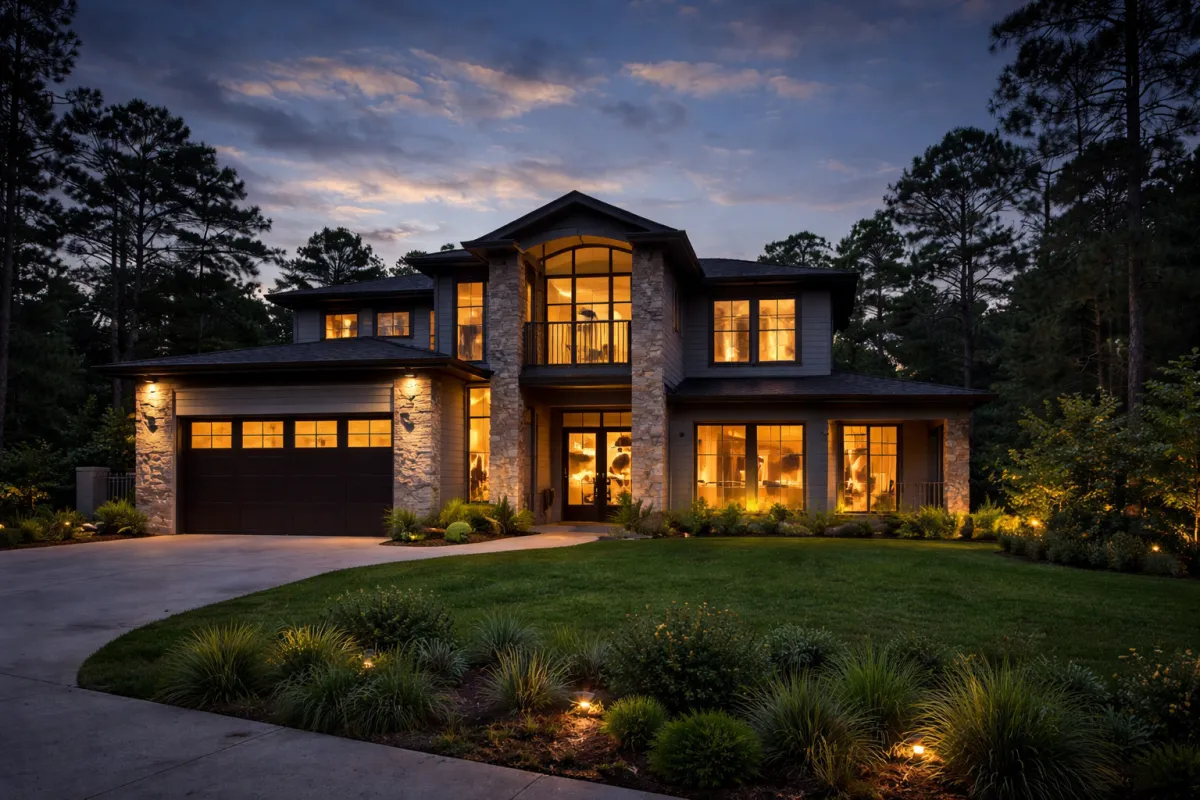
Luxury real estate photography Luminis Media often means big square footage and complex lighting. It can also mean radiant comfort, discreet air distribution, thick insulated assemblies, and sophisticated water management. Showing these without making the home feel clinical is a skill. In a ridge top estate with a 30 kW array, we shot mid afternoon interiors with shades half down to demonstrate solar control. The dining room centerpiece was the view, but the subtle gradient on the shade fabric told a second story. The clients appreciated that restraint, and the eventual buyer cited the comfortable glare control during their private tour.
For luminis.media luxury real estate photography, we budget additional time for system portraits. A mechanical room with manifolded hydronics can be genuinely beautiful, almost like an instrument panel. With clean cable runs and labeled valves, it deserves a frame. We light it like a still life, not a basement. This approach respects both the craftsmanship and the buyer’s intelligence.
Communicating trade offs without losing the sale
Sustainable design sometimes asks buyers to accept different patterns of living. Natural ventilation may feel softer than a sealed, high pressure HVAC system. Induction has a different tactile rhythm than gas. Images can prepare people for that, which reduces surprises at showings. A kitchen scene with a pot on an induction cooktop, even if not turned on, quietly telegraphs the choice. A sliding shade panel half open shows a manual adjustability that some buyers love and others need to learn.
There are compromises in photography too. A north facing living room in winter will never glow like a south facing counterpart at 4 p.m. We can add light, but we prefer to maintain the room’s calm. If we try to force a summery aura, the space may feel fake. We note these decisions with agents so their copy can pair honestly with our imagery.
Pricing, timelines, and the cost of doing it right
Sustainable practice is not necessarily more expensive, but it does reward planning. Sequencing around natural light takes coordination. Minimizing travel and revisits saves carbon and labor, yet sometimes a second visit is exactly what protects authenticity. With real estate photographer Luminis Media, agents see proposals that include a small carbon offset line for longer trips, with options to waive it if the client prefers a different contribution. Most say yes. It is transparent and it reflects the reality that images are part of a larger system.
Turnaround times account for color management and clean exports for different platforms. Our luminis.media real estate photography packages typically deliver web galleries within 24 to 48 hours, video within three to five days, and social cuts as requested. The pace is fast enough for listings, but it leaves room to avoid sloppy, energy heavy reprocessing.
A compact toolkit for lower impact production
Some clients ask what changes make the biggest difference on our side. The tools are not exotic. They are just deliberate.
- Mirrorless cameras with efficient batteries and sensor stabilization, cutting down on heavy lighting.
- LED panels with high CRI, dimmable, and soft modifiers that pack small.
- Color targets and calibrated monitors to avoid re edits and misprints.
- Portable power stations with solar top ups for remote or all day shoots.
- A cloud delivery system that creates MLS sized and press sized sets automatically.
Each item reduces wasted time or power, and together they keep the footprint lean without compromising quality. They also make us more flexible, which matters when weather shifts and we need to pivot.
Why this approach is good for brands and portfolios
Agencies and developers build reputations on what they show repeatedly. If your last five projects emphasize walkability, daylight, and durable materials, but the imagery treats them like any other home, the message blurs. Conversely, if your portfolio has a consistent visual language around sustainability, it amplifies your market position. We see this with clients who hire a Luminis Media real estate photographer repeatedly. Their feeds start to educate followers. Side by side images of winter and summer light at the same window show how overhangs work. Short reels of a rain chain in a storm do more than a paragraph of specs. Over months, the audience learns what to look for and starts to value it.
For brokers, this approach supports listings at different price points. A compact ADU with all electric systems and a smart envelope deserves the same visual respect as a large custom home. It signals that efficiency is not a luxury upgrade, it is baseline quality.
Credibility comes from consistency
We cannot claim sustainable values in our marketing and ignore them behind the scenes. So we measure, adjust, and keep learning. Some things we tried did not stick. Ultra minimal travel kits sometimes left us short on modifiers for echoey spaces. We now carry one extra softbox, and it travels with a shared team kit so multiple photographers do not each buy and ship duplicates. We tested fully cloud based editing, but network energy and latency costs beat the savings. Local edit, cloud archive is our settled balance.
Clients notice the through line. Whether it is Luminis Media real estate photography, property photography Luminis Media for rentals, or a full luminis.media real estate videography package for a new build, the ethic is steady. Show what matters, tread lightly, make the sustainable features easy to understand.
Bringing it into your next listing
If you are preparing a home with solar, high performance windows, efficient mechanicals, or low impact landscaping, tell us early. Share any commissioning reports, model numbers, and plan sets you are willing to provide. During the pre shoot call, we will map the story beats and the sun path, then schedule tight. When it is time to shoot, we arrive ready to honor the design with images that breathe. The results tend to attract the kind of buyer who will care for the home in the way it was built to be cared for.
Sustainable design and strong visuals are not separate tracks. They reinforce each other when handled with care. That is the heart of our work across real estate photography luminis.media and video. It is also the part that makes the job satisfying, because we get to help good buildings speak for themselves.